Motorized vs Traditional Track Lighting: Which One Actually Saves You More Money?

Aug. 06, 2026


      Every track lighting buyer eventually asks the same question: motorized vs traditional track light — which one actually saves you more money? The LED track light vs traditional comparison starts with purchase price, but the five-year total is a different story. 
      The obvious answer is "traditional, because it costs less upfront." The honest answer is more interesting. When you add labor, lamp life, beam control and re-aiming effort across five years, the two systems change places on the cost curve. 
      This guide compares them on the numbers that matter: purchase price, installation and retrofit cost, flexibility, remote control, and total cost of ownership.


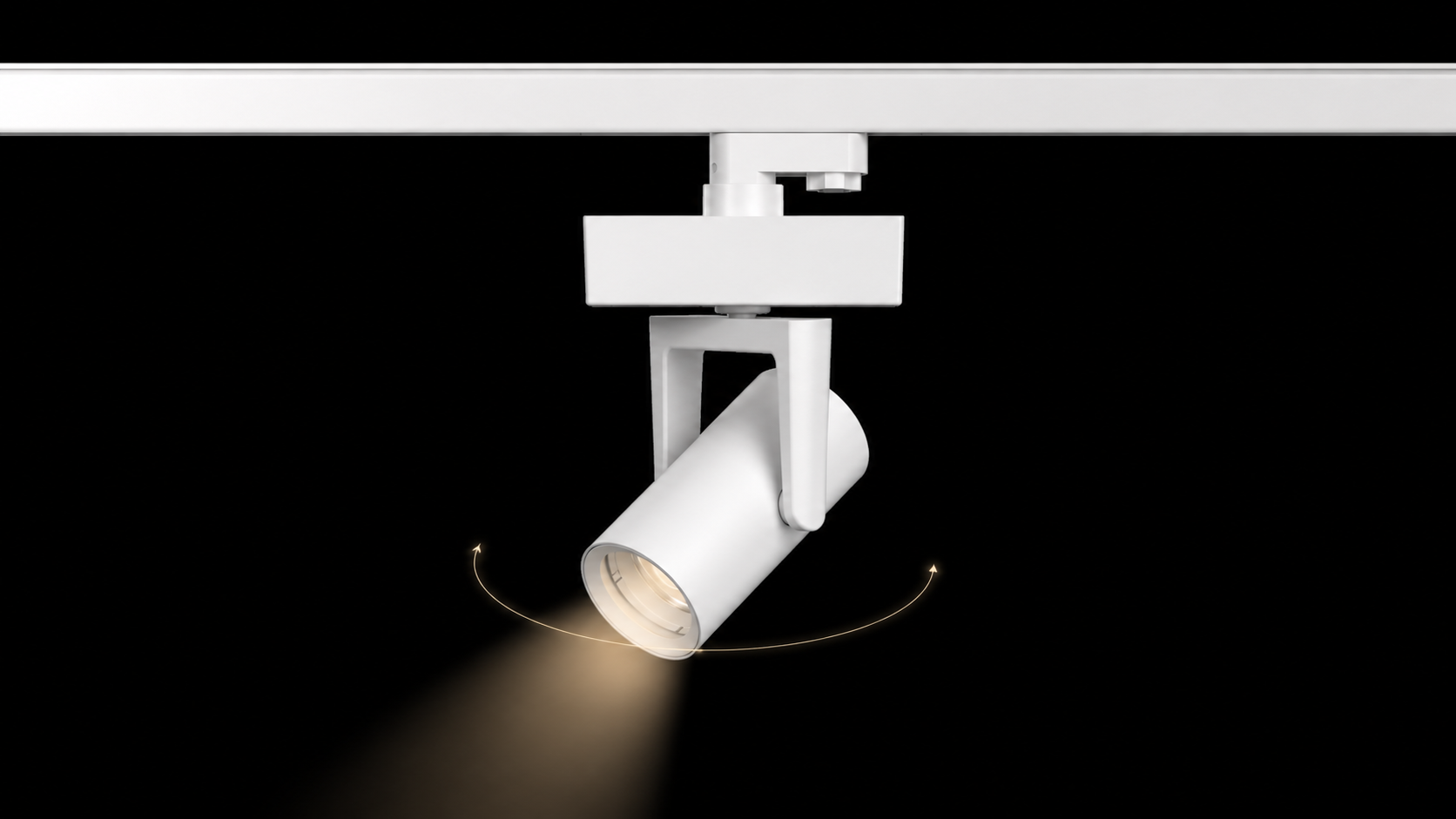
Motorized vs traditional track light heads on the same ceiling rail: a fixed head pointing straight down on the left, a motorized head tilting with motion arcs on the right.


      What Is Motorized Track Lighting and How It Works


      A motorized track light replaces the manual knuckle joint of a traditional head with a small electric motor. The head pans left and right, tilts up and down, and in some models adjusts its beam angle — all driven by a motor instead of a hand. 

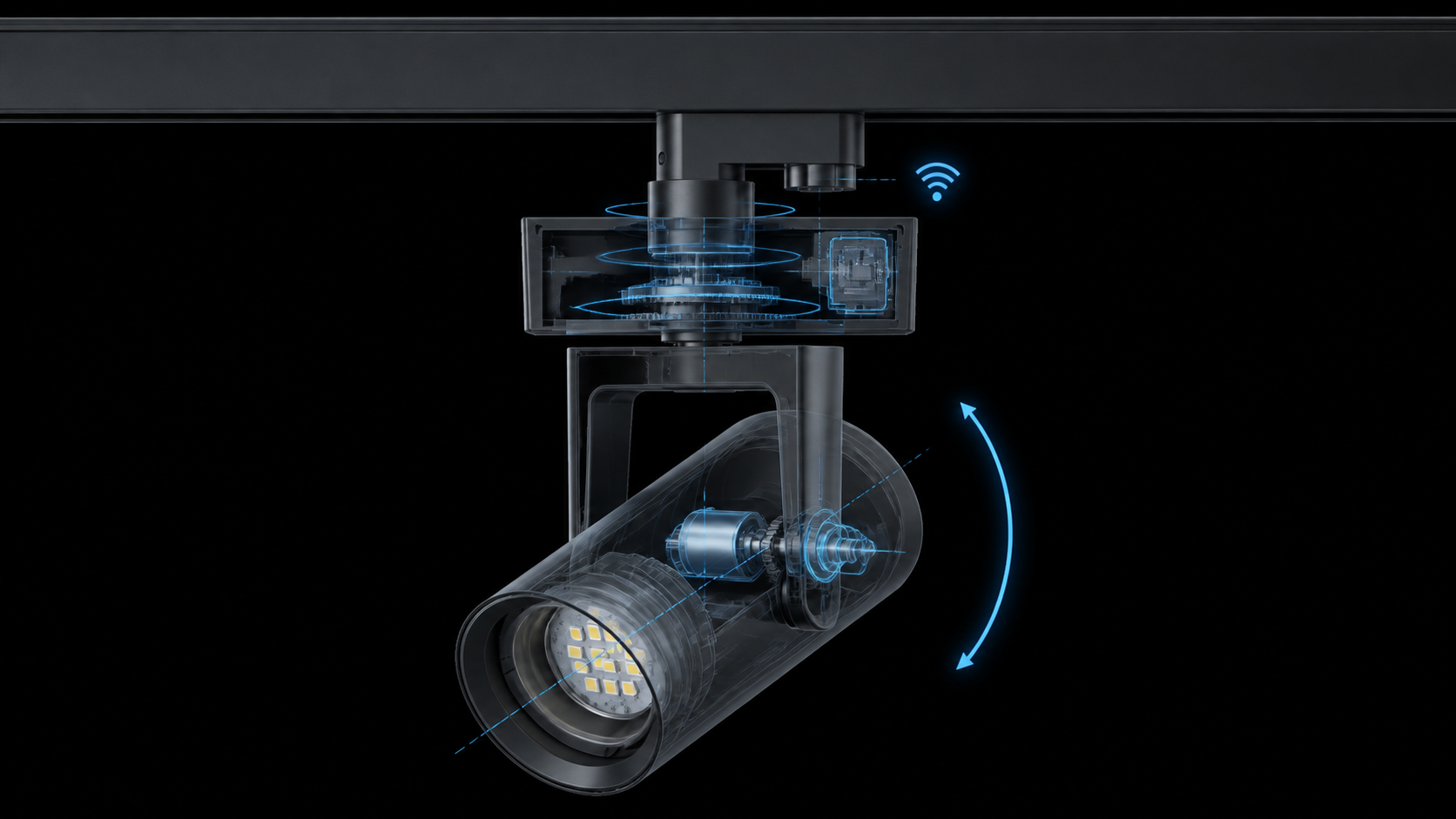
      Inside the housing you will find four components that a traditional head does not have: a small electric motor, a pan mechanism with rotation control, a tilt mechanism with angle control, and a wireless receiver. The LED chip array and optics are otherwise identical to a quality traditional head.

      The motorized category includes several form factors. A motorized pan tilt track light is the most common — pan and tilt are both powered. Some models add powered beam angle adjustment, which turns one fixture into a spotlight, a wall wash and a flood from the same position.

Cutaway illustration of a motorized track light head showing the electric motor, pan mechanism, tilt mechanism, LED chip array and wireless antenna.


      Traditional Track Lighting: The Tried-and-True Choice


      Traditional track lighting has been a commercial and residential staple for decades, and for good reason. The heads are simple, durable and cheap. A row of fixed heads mounted on a rail is a predictable lighting pattern that most installers can set up in minutes. 

      Where traditional lighting wins is simplicity. There is nothing to fail, nothing to pair, nothing to charge. The trade-off is that every adjustment is manual. Changing a display, moving a product wall, or re-aiming after a layout change means getting on a ladder, loosening the knuckle, and repeating the process head by head.

      For a track lighting comparison between the two, the real question is not which one is "better" — it is which failure mode you can afford: manual labor on a ladder, or a motor that occasionally needs service.

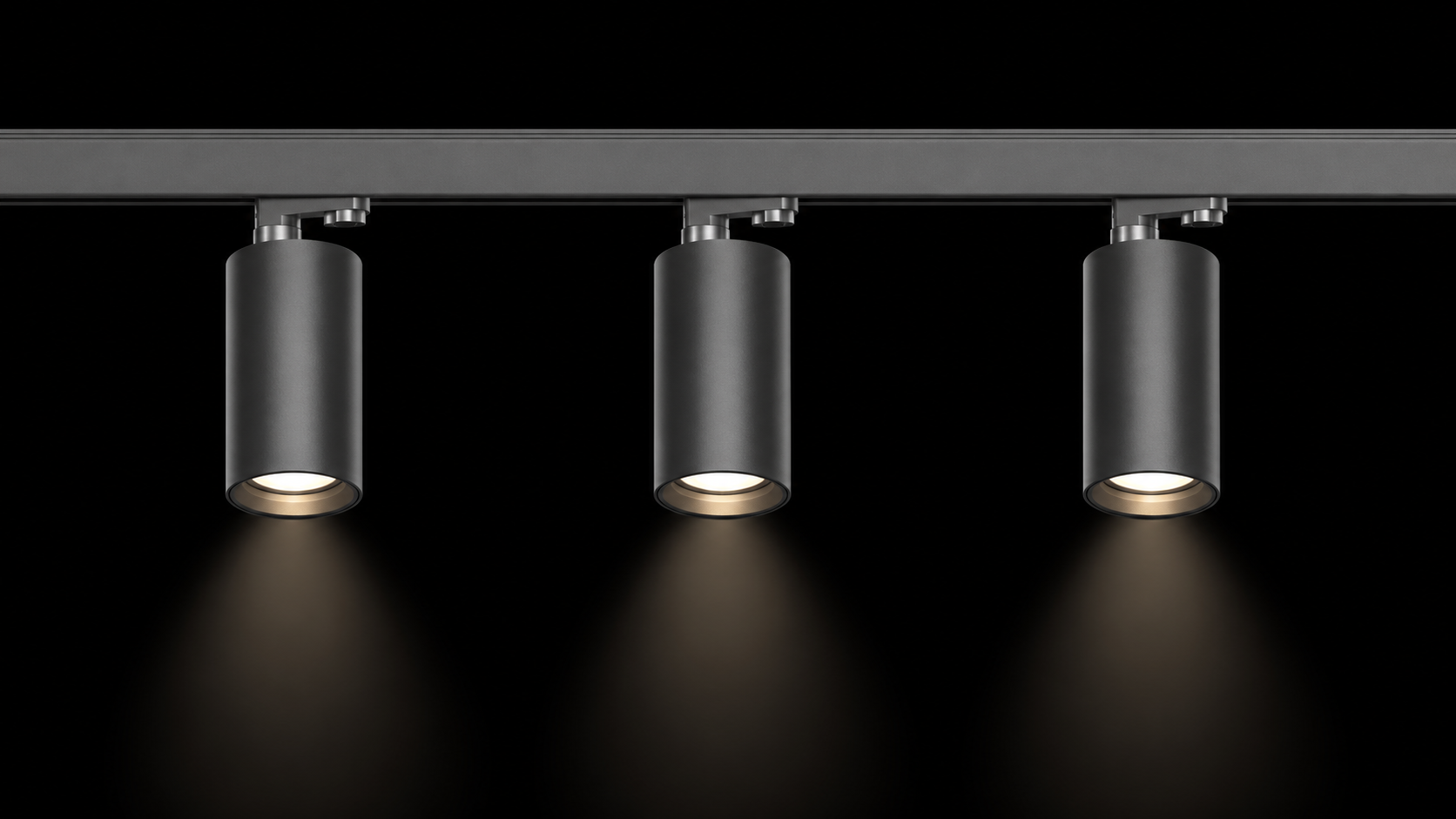
Three identical traditional fixed track light heads mounted in a row on a ceiling rail, all pointing straight down at the same angle.


      The Flexibility Factor — Pan, Tilt, and Beam Control


      This is where the comparison stops being close. A motorized pan tilt track light gives you control that a fixed head physically cannot offer: every axis of the beam is adjustable without touching the fixture. 

      Consider a retail display that changes weekly. With traditional heads, re-aiming four fixtures takes a ladder, fifteen minutes and a second pair of hands for the ladder. With a motorized system, the same change is a remote control or an app: two seconds per head, from the floor.

      Beam angle flexibility. One head, three beams to cover different object sizes:

    Beam angle

    Coverage

    Best for

    15°

    Narrow spotlight

    A single artwork, one object

    30°

    Medium beam

    Two artworks, a display shelf

    60°

    Wide flood

    An entire wall, ambient coverage


Four-panel grid showing the same adjustable beam angle track light projecting a 15-degree spotlight, a 30-degree medium beam, a 60-degree flood and a tilted beam on a sculpture.

The beam itself is more valuable too. An adjustable beam angle track light can throw a narrow 15-degree spotlight on a single artwork, a 30-degree medium beam across two pieces, or a 60-degree flood across an entire wall — from the same head, in the same position. A traditional head with a fixed optic can only do one of those.


Fewer fixture types to specify, more design freedom on site.

      Remote Control vs Manual Adjustment — Real-World Difference


      The practical difference between remote controlled track lighting and manual adjustment is not convenience — it is frequency of use. 

      Manual adjustment is fine if the lights are aimed once and never touched again. Homes with fixed furniture, galleries with permanent hangs, and offices with stable layouts rarely need re-aiming. For them, the manual system is the rational choice — cheaper, simpler, nothing to maintain.

      Remote control earns its cost when lighting changes regularly:
      1. Retail — displays rotate weekly, and the light plan follows the merchandise

      2. Hospitality — mood scenes change across the evening (dinner, late bar, cleaning)

      3. Museums — temporary exhibitions re-hang every month

      4. Showrooms and galleries — product positions move with the collection
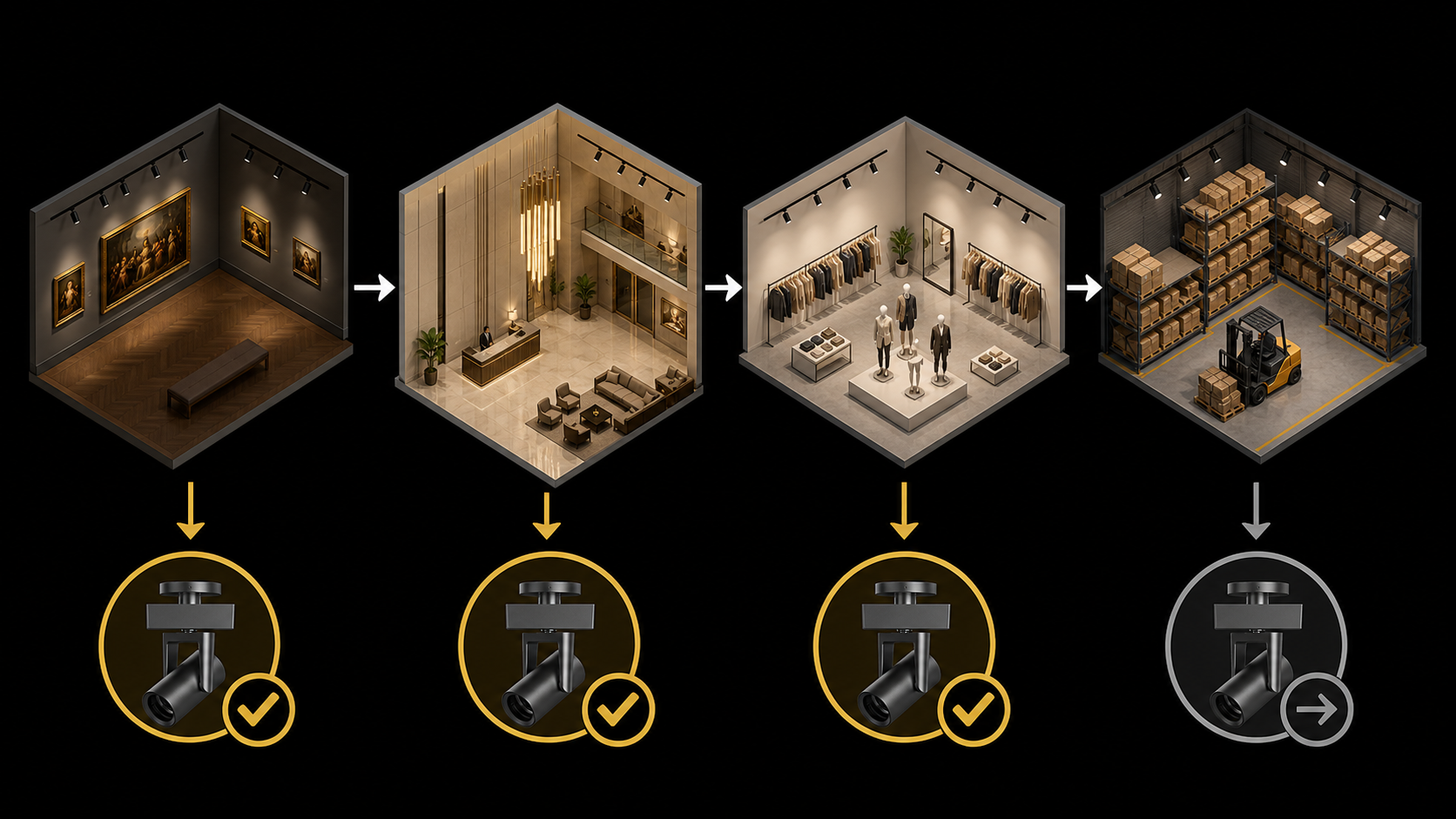

      In those environments, a wireless remote control track lighting setup pays for itself quickly, because every re-aim costs a human being on a ladder. The labor math is the whole story.

      Installation & Retrofit Cost: Motorized vs Traditional


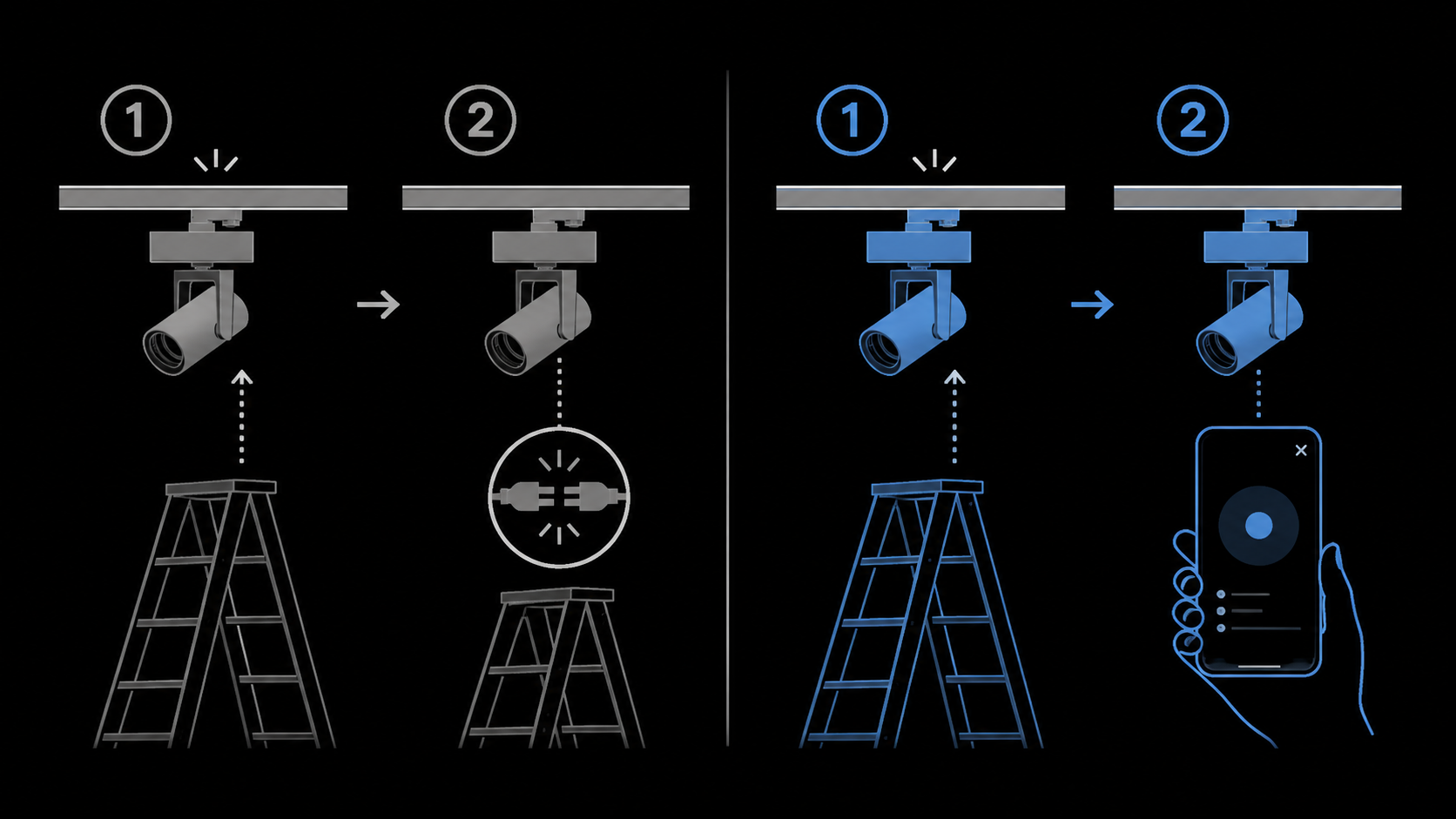
      Upfront, traditional wins on price. The track light retrofit cost of adding fixed heads to an existing rail is minimal: the rail is already there, and each head is a mechanical snap-in. 

      Motorized retrofit is a little more involved. Each head needs power for its motor, so the rail must carry an extra circuit or the head needs a power-over-track solution. Wiring for motorized track light ROI scenarios is usually a one-time cost — but it is a real one, and it shows up in the first year's total.

      The honest framing: motorized costs more to buy and slightly more to retrofit, then spends the next five years not sending anyone up a ladder.

Side-by-side icon sequence: traditional track light installation with snap and plug steps, motorized track light installation with snap and smartphone app pairing steps.

When to choose motorized vs traditional. The decision rule is simple:

Choose motorized if your lighting changes more than a few times a year — retail, hospitality, galleries, exhibitions, or any space where the "scene" is part of the product.


Choose traditional if the lights are aimed once and left alone — offices, warehouses, fixed residential layouts, anywhere stability beats flexibility.


For a full spec-level breakdown of electric track lighting for commercial projects, see our commercial track lighting guide series — and if motorized is the direction, the Encore Movia 30W Motorized Track Light is the fixture we build for this exact use case: pan, tilt and beam control from the floor, in a housing rated for continuous commercial operation.
      Head-to-Head Comparison


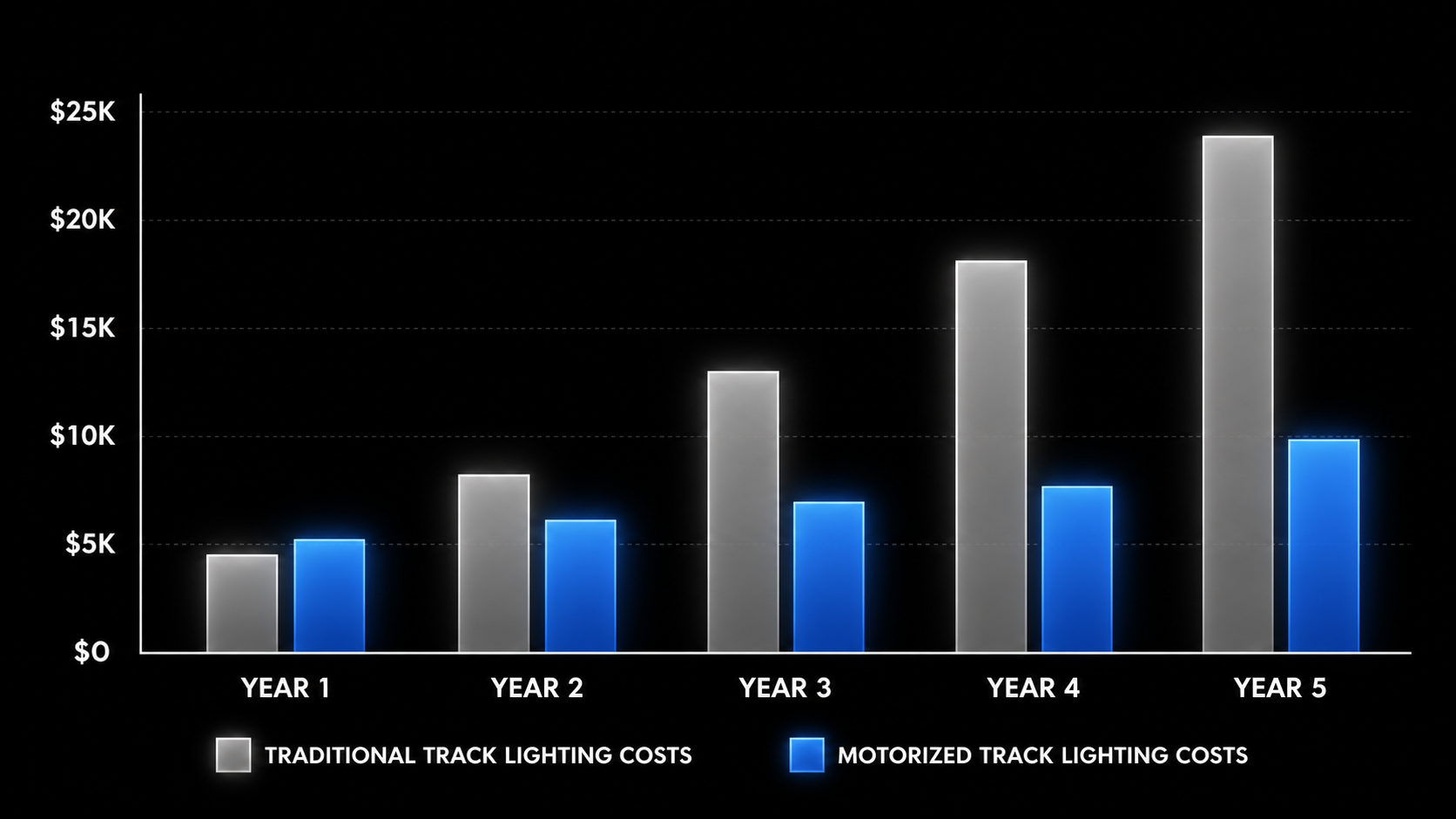
      The five-year total is where the comparison flips. Traditional lighting saves money on day one and spends it back one ladder trip at a time. Motorized lighting spends a little more upfront and then sits quietly — re-aimed from the floor, with the same LED chips and the same lamp life as any quality fixture. 

      For a motorized vs traditional track light decision, the answer is: it depends on how often you re-aim. If the answer is "rarely," buy traditional. If the answer is "every week," the motorized system is not a luxury — it is the cheaper option over time.

      We believe light has a job. Everything we build starts from there.

Five-year cost comparison bar chart: traditional track lighting costs growing quickly due to manual repositioning labor, motorized track light ROI starts slightly higher but grows slowly.

Previous: None

Next: None

Latest Post