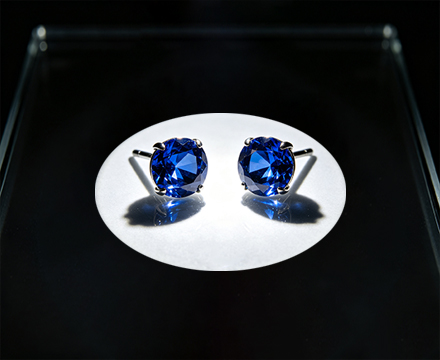
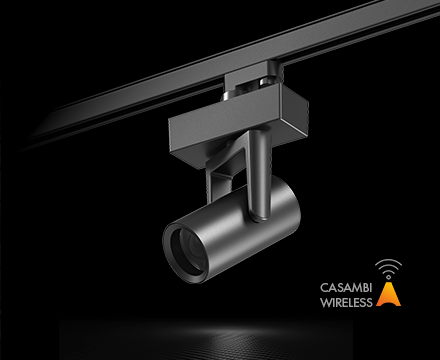
In the realm of high-end commercial and architectural lighting, a seemingly contradictory challenge has become a shared concern for designers and owners: how to achieve the "disappearance of fixtures within the space" without sacrificing the expressive power and control of light?
Traditional recessed lighting designs often required compromises between size and performance—until ENCORE introduced the DELLA 2.0 recessed lighting system, breaking this impasse entirely.

"Small size, big power" is not just marketing hype,
but a response to the current trend of synergistic evolution between spatial aesthetics and lighting efficiency. In retail, hospitality, and art spaces, ceilings increasingly favor purity and integrity, with the presence of fixtures being minimized. Yet this does not mean light should be diminished—on the contrary, it demands greater precision, efficiency, and controllability.
DELLA 030 gives the answer:
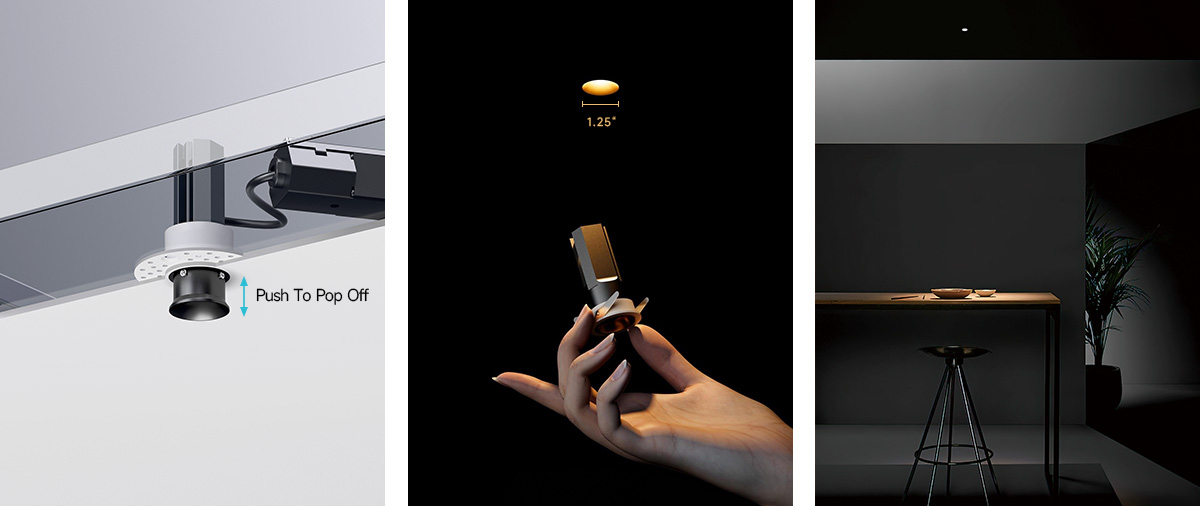
The standout DM030 model in DELLA 2.0 delivers 8W of high-power output through an aperture diameter of just 35mm, achieving luminous efficacy comparable to traditional fixtures two to three times its size. This breakthrough stems from ENCORE's systematic innovations in optical structure, thermal management, and electrical system integration—we're not just making things smaller, but redefining what "small" means while building greater strength.
When "invisible installation" becomes standard, how can performance remain uncompromised?
In current high-end projects, downlights are gradually transitioning from "functional components" to "architectural elements," with their installation methods and visual forms increasingly integrated into the building's texture. However, small-aperture downlights commonly found in the market often face three major pain points:
1、Insufficient light output, making them inadequate for key lighting tasks;
2、Weak glare control, compromising visual comfort;
3、Difficult maintenance, requiring complete replacement upon damage.
DELLA 2.0 was born to address these pain points.
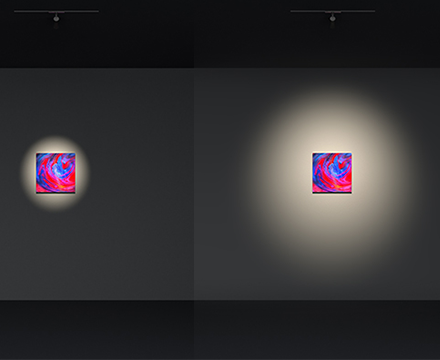
Through its super-modular design, it not only achieves "big light from a small aperture" but also delivers glare control levels of UGR<16 (some models <6) within an extremely small aperture. This is accomplished via a 35°–50° cut-off angle and multi-level optical accessories.
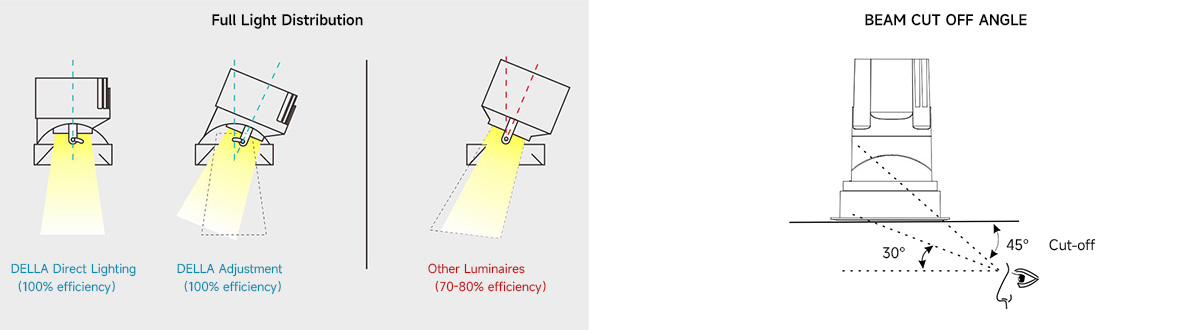
Not Just Small, But Sustainable Systems Thinking.
DELLA 2.0's super-modular Design.
The system enables tool-free replacement of all optical components—lenses, honeycomb grids, filters. More importantly, its LED light source and optical components are independently replaceable, extending product lifespan from the design stage and reducing total lifecycle costs.
This means a single physical fixture can adapt to diverse requirements—from artistic lighting to commercial displays—through simple reconfiguration.
This "one-lamp-multiple-functions" design philosophy aligns with the trend of frequent retail space reconfigurations and dynamic adjustments in exhibition settings, while also endowing architectural lighting with temporal adaptability. Lighting fixtures are no longer disposable items but rather long-term assets that can evolve and be maintained.
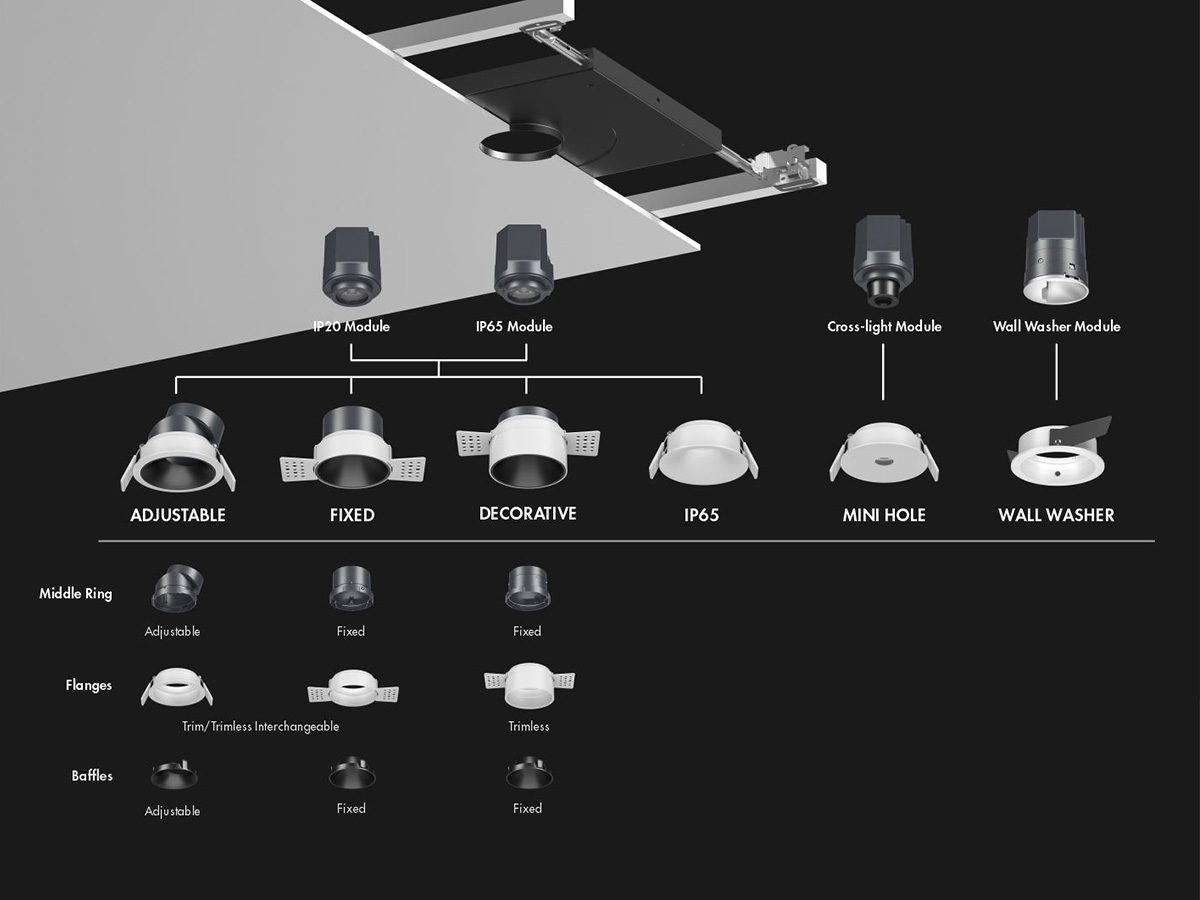
Invisible lights, visible illumination.
In high-end retail, DELLA 2.0 seamlessly integrates into ceilings, highlighting merchandise rather than the fixtures themselves.
In museums and galleries, its precise light distribution and low glare characteristics protect exhibits while enhancing viewing experiences.
In hotels and residences, it creates tranquil, comfortable lighting environments through soft light output and minimalist aesthetics.
All this is built upon the design principle of "minimizing size while optimizing light quality."
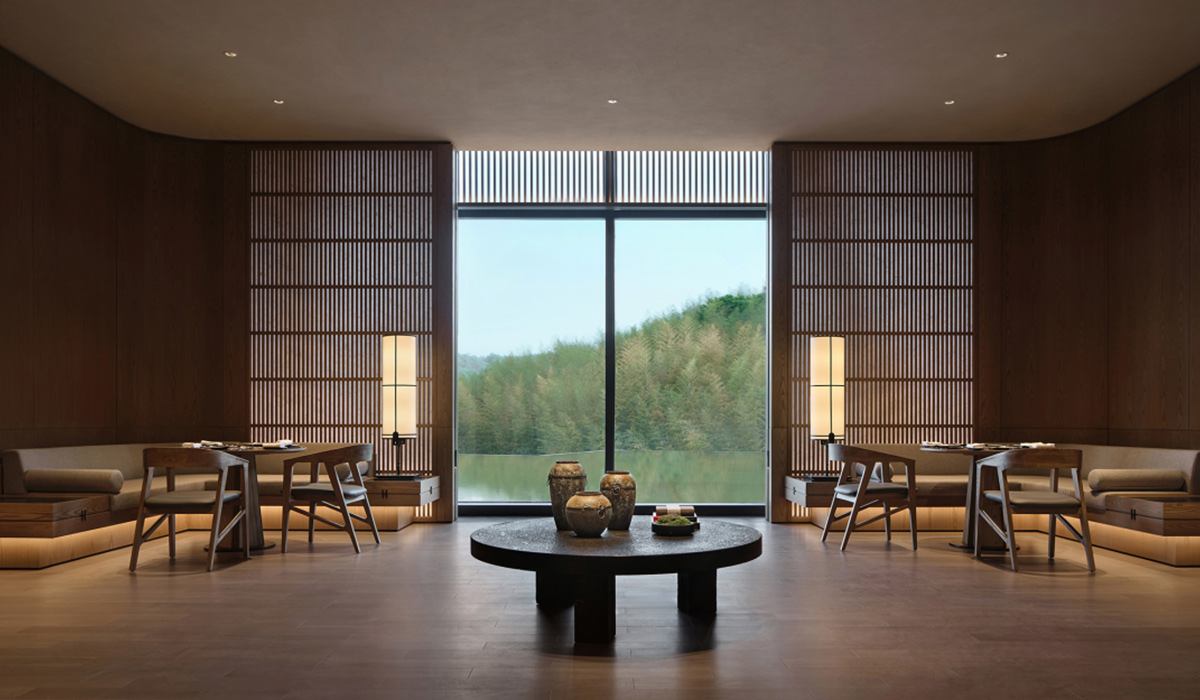
The future of light lies in the details.
ENCORE believes that true lighting innovation arises from reconciling seemingly conflicting demands—compact size with high output,
concealed installation with precise light control, instant adaptability with enduring reliability. DELLA 2.0 is not merely a recessed lighting system;
it is our profound interpretation of the relationship between light and space.
In an era where luminaires increasingly "disappear," we choose to give light greater substance.
Previous: VEGA-Ultimate control of the light
Next: Cylinder Lighting Solutions for Commercial & Residential